Sunday, February 11, 2007
The Mormon, the Maverick, and the Mayor
An insightful and witty look at the three Republican frontrunners for President (Romney, McCain, and Giuliani): The Rise of the Metro Republicans. Conclusion: "our first urban, Italian, thrice-married president may come to us through the modern Republican party, which, as everyone knows, is rural, racist, Dixiecrat, redneck, uptight, and wholly intolerant of personal slippage. Nothing stands still for long, not even our parties. And what would the map look like then?"


The Sin Eater
CT's Peter Chattaway reviews the new FoxFaith movie, The Sin Eater, directed by Michael Landon, Jr. and adapted from the novel of the same name by Francine Rivers.
McGrath vs. Dawkins
Here's an interesting lecture by Alister McGrath, responding to Richard Dawkins: Is God a Delusion? Atheism and the Meaning of Life (MP3). It was given at the City Church of San Francisco in the fall of 2006.
McGrath is Professor of Historical Theology at Oxford and Director of the Oxford Centre for Christian Apologetics. He is the author of Dawkins' God: Genes, Memes, and the Meaning of Life, as well as The Twilight of Atheism: The Rise and Fall of Disbelief in the Modern World.
McGrath's wife is Joanna Collicutt McGrath, lecturer in the psychology of religion at University of London. They recently coauthored a response to Dawkin's The God Delusion, entitled The Dawkins Delusion? It just came out in the UK, and will be published by IVP in the US in May 2007. He was recently interviewed about the book and about Dawkins in the Belfast Telegraph.
McGrath is Professor of Historical Theology at Oxford and Director of the Oxford Centre for Christian Apologetics. He is the author of Dawkins' God: Genes, Memes, and the Meaning of Life, as well as The Twilight of Atheism: The Rise and Fall of Disbelief in the Modern World.
McGrath's wife is Joanna Collicutt McGrath, lecturer in the psychology of religion at University of London. They recently coauthored a response to Dawkin's The God Delusion, entitled The Dawkins Delusion? It just came out in the UK, and will be published by IVP in the US in May 2007. He was recently interviewed about the book and about Dawkins in the Belfast Telegraph.
Saturday, February 10, 2007
Adoption: The Heart of the Gospel
Here is an excellent message from John Piper on Adoption: The Heart of the Gospel (55 min).
Taking Gal. 4:4-8 and Rom. 8:14-17 as his main texts, Piper demonstrates eight similarities between God's adopting of us and our adopting of children:
Though I haven't listened to it yet, Mike Bullmore recently delivered a sermon called "Adopted into the Family" (stream | download), based on 1 John 3:1-2, that has been recommended as well.
(HT: Jeff Brewer)
Taking Gal. 4:4-8 and Rom. 8:14-17 as his main texts, Piper demonstrates eight similarities between God's adopting of us and our adopting of children:
- Adoption was for God, and is for us, costly (Gal. 4:4-5; Gal. 3:13).
- Adoption did for God, and does for us, involve the legal status of the child (Gal. 4:4-6).
- Adoption was blessed, and is blessed, with God's pouring out a spirit of sonship (Gal. 4:6).
- Adoption was for God, and is for us, marked by moral transformation through the Spirit (Rom. 8:14).
- Adoption brought us, and brings our children, the rights of being heirs of the father (Gal. 4:4-6; Rom. 8:16-17; 1 Cor. 3:21-23).
- Adoption was for God, and is for us, seriously planned (Eph. 1:4-6).
- Adoption was for God, and often is for us, from very bad situations (Eph. 2:3).
- Adoption meant for all Christians, and means for parents, that we suffer now, and experience the glory later(Rom. 8:22-23).
Though I haven't listened to it yet, Mike Bullmore recently delivered a sermon called "Adopted into the Family" (stream | download), based on 1 John 3:1-2, that has been recommended as well.
(HT: Jeff Brewer)
Friday, February 09, 2007
Robert George at Southern Seminary
Russell Moore writes that
Robert P. George, McCormick Professor of Jurisprudence and Director of the James Madison Program in American Ideals and Institutions at Princeton University, delivered the Norton Lectures at The Southern Baptist Theological Seminary yesterday and today. The lectures dealt with issues ranging from embryo ethics to marriage to judicial usurpation of American democracy. The question and answer sessions were valuable as well with Professor George fielding and answering questions from Southern Seminary students on issues ranging from sexual morality to pastoral response to infertility.You can access Professor George's three lectures online here.
I look forward to listening to these lectures. I've never heard Professor George lecture, but I have read some of his writings. He is among the most thoughtful and articulate public philosophers working today.
Reforming the African-American Church
Thabiti Anyabwile asks: "Can the Predominantly African-American Church Be Reformed?" See his answers in part 1, part 2, and part 3.
Ethanol, Tortillas, and Minimum Wage
Gene Veith points to a good lesson in economics:
Henry Hazlitt said it best in Economics In One Lesson:
Another application of Hazlitt's principle is the enthusiasm for an increase in the minimum wage (recently passed), despite the fact that it increases unemployment. Sound economic principles are often counterintuitive and unpopular because they require taking into account long-term consequences.
(HT: Gary Steward for final link)
Tortilla prices have doubled in Mexico, causing Mexico's legions of poor people, who depend on tortillas as a major staple of their diet, to riot, destablize the government, and, one suspects, motivating more of them to illegally immigrate to the United States. Why are tortilla prices soaring? Because of the push in the U.S. to replace gasoline with ethanol. The demand for ethanol, subsidized by the government at the rate of some 50 cents per gallon, has sent corn prices to the moon. This pleases the farm belt, of course, but the high corn prices are not only impacting tortillas, they will soon show up in higher meat prices. The tangled web of unintended consequences. . . .
Henry Hazlitt said it best in Economics In One Lesson:
"The bad economist sees only what immediately strikes the eye; the good economist also looks beyond. The bad economist sees only the direct consequences of a proposed course; the good economist looks also at the longer and indirect consequences. The bad economist sees only what the effect of a given policy has been or will be on one particular group; the good economist inquires also what the effect of the policy will be on all groups."
"The whole of economics can be reduced to a single lesson, and that lesson can be reduced to a single sentence. The art of economics consists in looking not merely at the immediate but at the longer effects of any act or public policy; it consists in tracing the consequences of that policy not merely for one group but for all groups."
Another application of Hazlitt's principle is the enthusiasm for an increase in the minimum wage (recently passed), despite the fact that it increases unemployment. Sound economic principles are often counterintuitive and unpopular because they require taking into account long-term consequences.
(HT: Gary Steward for final link)
Thursday, February 08, 2007
An Interview with Stephen Smallman
 I recently had the privilege of interviewing Steve Smallman about, among other things, his work on the "spiritual birthline," the gospel, evangelism, discipleship, and being "missional."
Stephen, can you tell us a little bit about yourself--your family, vocation, writing, etc.?
I'm from an unchurched family and came to faith in a Fundamentalist church in the 50's. From there I went to Bob Jones University, and over the course of time there I came to an understanding of Reformed theology and became presbyterian. I went on to finish at Covenant Seminary and went to McLean, Va, a suburb of Washington, DC, to serve a small PCA church in 1967. I was there for 30 years, and the congregation and I grew up together. During our stay in Washington Sandy and I raised four children. They are all grown and married to Christian spouses and have given us ten grandchildren.
We now live in the Philadelphia area. We moved here when I became the Executive Director of World Harvest Mission, a ministry devoted both to spiritual renewal through the gospel and gospel expansion. After serving WHM I returned to the pastorate, serving until last year. I'm now a teacher for several institutions, primarily for CityNet, a ministry supporting church planting, leadership training, and mercy ministry here.
We now live in the Philadelphia area. We moved here when I became the Executive Director of World Harvest Mission, a ministry devoted both to spiritual renewal through the gospel and gospel expansion. After serving WHM I returned to the pastorate, serving until last year. I'm now a teacher for several institutions, primarily for CityNet, a ministry supporting church planting, leadership training, and mercy ministry here.
My writings are largely used as pastoral helps for new believers. I have a set of communicant class lessons and three small booklets, all published by Presbyterian and Reformed. Crossway published my first book, Spiritual Birthline, and this spring they will publish a book of meditations on knowing God entitled, Forty Days on the Mountain. I have a website: www.birthlineministries.com, where there is additional information about my ministry and writings.
How did you come to faith?
As noted above I had no church background at all. When I was a teenager, the Lord used an invitation to play basketball to introduce me to a gospel-centered church. I had no clue what they were talking about, but I liked the people and kept coming, gradually understanding more and more, as well as becoming aware that whatever they had that made them so attractive, it was something I lacked. In that setting I finally realized that I needed to be "saved," and walked the aisle at a revival meeting and prayed the sinner's prayer. I'm one of those who can actually date the time of my conversion. But coming out of that experience, one of my prayers is that I would never forget what it was like to be in a church and Christian setting totally ignorant of the words that were being said. Of course, it took the effectual calling of the Spirit to open my eyes to the truth of Christ, but on a human level I have tried to preach and teach with an assumption that someone listening to me knows as little as I did at one time.
 In Spiritual Birthline you write that the goal of this book is "to help understand in practical terms how people actually experience the new birth." Why is this been such an important part of your ministry? Why is this important to grasp?
In my own pilgrimage, the study of "effectual calling" in a theology class at Bob Jones suddenly gave definition to what I intuitively knew--that my conversion was a consequence of God working in my heart, preparing me to surrender to Christ. It was one of those formative insights that put a real foundation under my personal experience. Since then I have been working to make this idea practical for "ordinary" Christians. With all the focus on the work of Christ on the cross (necessary, of course), I think the work of the Holy Spirit in transforming our hearts leading to conversion has been overlooked. It is certainly a standard part of theology, but for some reason there is little popular teaching on the subject. In older writers I began to discover references to the pastor as a "physician of the soul," and realized that in an earlier era pastoral ministry had much to do with guiding seeking souls to understand the work of God drawing them to Christ. I find this skill sadly lacking in pastors today. Even if we do "evangelism," it tends to be a mechanical application of gospel formulas. And if pastors are unskilled in the "cure of souls" (another lost term), that is only compounded in those they are teaching.
At the heart of the book is your "spiritual birthline" diagram, which compares spiritual birth to physical birth in order to help people understand what it means to experience the new birth.
 How and when did you develop this concept? Can you walk us through it?
The first time I drew out the birthline was for a group of inmates who were brought to Washington by Prison Fellowship, the ministry of Charles Colson. The day before I had preached a sermon on John 3, suggesting that a way to understand spiritual birth was to reflect on our physical birth--which is certainly what Jesus caused Nicodemus to do. If physical birth is really a process, marked by an event when the unborn baby goes public, doesn't that help us understand the process of spiritual birth? After the sermon some of the Prison Fellowship staff told me that was the first time anyone had ever explained "God's part of salvation" (their words) to them. They asked me to tell the same thing to a group of inmates. When I drew out the birth process on a timeline I had no idea it would become a basic paradigm of how I do ministry from that time forward.
Briefly, the parallel of physical and spiritual birth makes it clear that they both should be thought of in terms of process rather than event. I present this by first walking through the familiar experience of physical birth. If there is a key moment, it has to be the point of conception, which is private and virtually invisible. Over time that new life grows until it inevitably "goes public." We don't speak of life as beginning at the time of delivery, but now the child begins a new phase of growth--through infancy, childhood, and adulthood. I suggest that helps to explain the process of spiritual birth: it begins when God sovereignly begins a new life in our dead souls. Jesus made it clear (John 3) this was a work of the Holy Spirit, and in fact "born again" can be properly translated "begotten again," or "begotten from above." But rather than instantly appearing, the new life grows like a spiritual pregnancy until we are compelled, in one form or another, to "go public," and we "call on the name of the Lord." This is the experience we commonly label as conversion--it is our response to the inward calling/convicting work of the Spirit when the truth of the gospel burns itself more and more into our consciousness. Reformed theologians typically speak of this season of spiritual pilgrimage as "effectual calling," and Paul frequently reminds believers in the beginning of his epistles of their calling to Christ (Rom. 1:6; 1 Cor. 1:2, 9). The Westminster Shorter Catechism (#31) explains that the work of effectual calling by the Spirit brings us to the point where we "embrace Jesus Christ freely offered to us in the gospel." I represent that "embrace" or conversion with a dotted X. At first I simply drew it as an X on the timeline, but as that helped people to think through their actual experience of conversion I began to appreciate the remarkable variety of ways people came to the place of actually expressing faith. In the end we can only say that when the Spirit calls us it will bring us to surrender to Jesus, but the form or time that takes cannot be confined to a moment or a formula.
Finally, what the birthline makes clear is that the process begun by the Spirit will continue into what we typically define as sanctification. There tends to be so much focus on the conversion experience in our evangelical culture that spiritual growth is viewed as a good thing, but not necessarily present with all converts. But a biblical understanding of salvation assumes that those whom the Lord calls to himself will continue in that calling, and I try to reflect this in the idea of the birthline.
I should add that I use the birthline as a helpful tool to explain the invisible, supernatural work of the Spirit; what Jesus referred to as the "wind blowing where it wills." We are in the presence of divine mystery in the work of God in the soul, and there is no final way to describe it. Some reviewers of Spiritual Birthline insist I am trying to artificially force spiritual experience into this model of physical birth, but that is not my intention at all. If it doesn't offer insight, people can use the picture of resurrection or re-creation or one of the other images of spiritual birth.
Is spiritual birth an event or a process? What difference does the answer make to our understanding of conversion?
Spiritual birth is essentially a process, during which there may be an event or many events when the Lord becomes real to us. I think the insight that coming to Christ is really a process gives people new appreciation of the work of God in their lives over a lot longer period of time than they may have considered before. It also serves to give people much more patience as they work with others who they see being drawn to Christ.
Is spiritual birth an event or a process? What difference does the answer make to our understanding of conversion?
Spiritual birth is essentially a process, during which there may be an event or many events when the Lord becomes real to us. I think the insight that coming to Christ is really a process gives people new appreciation of the work of God in their lives over a lot longer period of time than they may have considered before. It also serves to give people much more patience as they work with others who they see being drawn to Christ.
I have been particularly gratified that this idea of process has been very helpful to many raised in godly homes and churches who honestly cannot remember a time when they didn't trust Jesus. In many cases they have spent years trying to identify "the" time they became a Christian to legitimize their conversion in the eyes of others in their churches. A chapter in the book specifically dealing with this has been particularly well received.
How do you define regeneration and conversion? Why is it important to distinguish between these two?
Regeneration is a work of God in the soul--specifically, God the Holy Spirit. If you read the theologians they will differ about when regeneration actually occurs--is it that point of conception I picture on the birthline? Is it at the end of effectual calling? Or is the whole process regeneration, so that effectual calling and regeneration are really the same? But however defined, there is consensus that regeneration, a work of God, precedes and makes possible a genuine conversion, which is our response of faith, repentance, and a life of discipleship.
In popular teaching regeneration is essentially synonymous with conversion, or stated in a way that "accepting Jesus" causes our new birth. If that is the case, then virtually any form of persuasion or even manipulation can be justified to provoke people to make their "decision for Jesus," for in doing so we are saving lost souls. So understanding this distinction between the work of God and our response will have a big impact on our view of evangelism. Conversion can be a purely human experience, so just getting "converts" may not be a result of the Spirit's work.
I also find it makes a difference in how we teach the Christian's walk. When we work from a conversion experience, the appeal of preachers is typically that we should be thankful and therefore we should obey--almost a payback. On the other hand, I find Paul almost always begins his teaching of Christian living by reminding his readers of what God has done for them in transforming them into new people. It is not just that we ought to be different, but we are different because we have been united to Christ, and therefore the new walk is an overflow of the life given by the Spirit (Galatians 5:25 is just one example).
I explain my views of regeneration and calling in more detail, with citation of many sources, in a paper called "Understanding the New Birth," that can be read or downloaded from my website.
You suggest in your book that how we conceive of conversion affects how we do evangelism and discipleship. Can you explain?
I think the short answer to that is a statement I make several times in the book: "We are not called to be salesmen for Jesus--working to close the deal, but we are called to be 'spiritual midwives'--there to help with the birth." If discipleship is the idea of coming alongside someone as they follow Jesus, then discipleship actually begins in those early stages of their walk, before they even believe. This is much closer to the model of the Great Commission where Jesus commands his disciples to "make disciples." That discipleship process includes "baptizing them," that is bringing them to the place where they publicly confess Christ, but it also means "teaching them to obey all things," which means training in the new life that is found in Christ. I view evangelism and discipleship as two phases of "making disciples."
Why is it important for us to know and to be able to retell our own story?
I'm impressed with how often Paul encourages people to remember their experience of being taken from the old life into the new (Titus 3:3-8 is one example) as a way to celebrate the work of grace in their lives, that came through "renewal in the Holy Spirit." More than simply "giving their testimony," I try to encourage people to recall the ways the Spirit worked to point them to Christ. And in many respects, having a more God-centered understanding of their experience allows people to tell it to others in a more natural way--it is who they are, rather than a "canned" story about something they decided to do.
You commend "missional congregations." Can you explain what that means and why such congregations are important?
My own understanding of the essential nature of the church was radically changed a number of years ago through an encounter with John 20:21, "As the Father has sent me, even so I am sending you." These were virtually the first words the risen Christ said to his disciples who assembled together on the first day of the week (clearly a picture of the church). The sense of the Greek is not just that Jesus was commissioning his disciples, but that he was passing along to them the mission that had been given to him by his Father. Little study is required to recognize that mission as proclaiming and demonstrating the presence of the kingdom of God. I set about to define the kingdom in practical terms and then think about what it meant to lead a congregation in an affluent suburb toward living out the kingdom in in the way we did ministry. I think we made some progress in that direction. That to me is a "missional church," and when that term appeared in literature a few years later I thought it was a very appropriate way to define what we are all about. I know it is a new word, but I hope people will ask whether the church shouldn't define itself essentially in terms of the mission given to us by our King. I think we should.
What are "spiritual midwives," and what role do they play in conversion?
The second half of the book is an attempt to take the insights of the birthline and help those in ministry be sensitive to what the Spirit is doing in those they are working with. I think "midwife" is a good term to describe our role in seeing people come to Christ. We are there to answer questions, encourage and support, and even know when it is appropriate to "push" as people come closer to actually embracing Christ. But the Spirit is the one causing the new birth, and we need to learn to work in concert with what the Spirit is doing--which usually takes longer than we expect. It is an awesome and humbling privilege to have even a small part in a genuine conversion--we are part of his new creation. In many instances I have had people tell me that this understanding of our role revived their desire to become involved with the spiritual lives of others. These have frequently been people who have been trained in more aggressive forms of evangelism and have become discouraged when they either saw no results, or the decisions they did see did not seem to be genuine over the long run.
Do you see the "spiritual birthline" diagram as a tool to be used in evangelism? Is so, how?
The birthline diagram is not the sort of tool we would use in street-corner evangelism or in most conversations early in the process of a person coming to Christ. Its value is primarily a framework to help us believe that the Spirit may be at work in almost anyone we meet and we pray for discernment about how much someone can actually hear of gospel realities. As a pastor it was more typical for me to see people coming to church who were already beginning to feel drawn to Christ on some level. I think years of reflecting on the process of effectual calling gave me a desire to create an environment in which people were welcome to take as long as they needed to understand who Christ was and what it meant to follow him. So conversations about where people were spiritually were very natural. There have been many occasions when I would discuss the new birth with people and explain that if the struggles they were having were the work of the Holy Spirit then it would mean that at some point they would surrender to Christ. Often, I do draw out the birthline in these conversations with the X representing a surrender to Christ. This picture stays with people and opens the way for future conversations.
I think perhaps the most useful aspect of understanding the birthline is that it moves evangelism away from the exclusive focus on "the decision" and instead makes that conscious choice to follow Christ as one important step in a much larger process of spiritual journey.
Can you explain your concept of "gospel discipling"?
I think we have allowed the gospel to be defined totally by its use for unbelievers. So it is commonplace in our churches to think of moving on from the gospel when we do "discipleship." And then we wonder why it doesn't result in real spiritual transformation. I maintain that the chief tool of discipleship needs to be the gospel--defined in a much broader sense as the unfolding of all that Christ is and all that we have in Christ. So the challenge of "gospel discipling" is to learn to preach and teach the gospel to the church, to those who have already embraced the gospel on an elementary level. "The gospel is the power of God for salvation [much more than conversion or justification] for those who are believing [a present, progressive sense] (Romans 1:16). How to do this is a challenge I have been trying to think about for several years.
In my view the four elements of gospel discipling are (1) Focus on the gospel itself, and the centrality of Christ; (2) Help people understand how they came to believe the gospel (the birthline); (3) Teach the gospel doctrines (particularly justification, sanctification, and adoption); (4) Teach living that grows out of the gospel. On my website there is a paper, "What Is Discipleship?" that gives more detail, including how I see this outline unfold in the book of Romans.
You suggest in your book that how we conceive of conversion affects how we do evangelism and discipleship. Can you explain?
I think the short answer to that is a statement I make several times in the book: "We are not called to be salesmen for Jesus--working to close the deal, but we are called to be 'spiritual midwives'--there to help with the birth." If discipleship is the idea of coming alongside someone as they follow Jesus, then discipleship actually begins in those early stages of their walk, before they even believe. This is much closer to the model of the Great Commission where Jesus commands his disciples to "make disciples." That discipleship process includes "baptizing them," that is bringing them to the place where they publicly confess Christ, but it also means "teaching them to obey all things," which means training in the new life that is found in Christ. I view evangelism and discipleship as two phases of "making disciples."
Why is it important for us to know and to be able to retell our own story?
I'm impressed with how often Paul encourages people to remember their experience of being taken from the old life into the new (Titus 3:3-8 is one example) as a way to celebrate the work of grace in their lives, that came through "renewal in the Holy Spirit." More than simply "giving their testimony," I try to encourage people to recall the ways the Spirit worked to point them to Christ. And in many respects, having a more God-centered understanding of their experience allows people to tell it to others in a more natural way--it is who they are, rather than a "canned" story about something they decided to do.
You commend "missional congregations." Can you explain what that means and why such congregations are important?
My own understanding of the essential nature of the church was radically changed a number of years ago through an encounter with John 20:21, "As the Father has sent me, even so I am sending you." These were virtually the first words the risen Christ said to his disciples who assembled together on the first day of the week (clearly a picture of the church). The sense of the Greek is not just that Jesus was commissioning his disciples, but that he was passing along to them the mission that had been given to him by his Father. Little study is required to recognize that mission as proclaiming and demonstrating the presence of the kingdom of God. I set about to define the kingdom in practical terms and then think about what it meant to lead a congregation in an affluent suburb toward living out the kingdom in in the way we did ministry. I think we made some progress in that direction. That to me is a "missional church," and when that term appeared in literature a few years later I thought it was a very appropriate way to define what we are all about. I know it is a new word, but I hope people will ask whether the church shouldn't define itself essentially in terms of the mission given to us by our King. I think we should.
What are "spiritual midwives," and what role do they play in conversion?
The second half of the book is an attempt to take the insights of the birthline and help those in ministry be sensitive to what the Spirit is doing in those they are working with. I think "midwife" is a good term to describe our role in seeing people come to Christ. We are there to answer questions, encourage and support, and even know when it is appropriate to "push" as people come closer to actually embracing Christ. But the Spirit is the one causing the new birth, and we need to learn to work in concert with what the Spirit is doing--which usually takes longer than we expect. It is an awesome and humbling privilege to have even a small part in a genuine conversion--we are part of his new creation. In many instances I have had people tell me that this understanding of our role revived their desire to become involved with the spiritual lives of others. These have frequently been people who have been trained in more aggressive forms of evangelism and have become discouraged when they either saw no results, or the decisions they did see did not seem to be genuine over the long run.
Do you see the "spiritual birthline" diagram as a tool to be used in evangelism? Is so, how?
The birthline diagram is not the sort of tool we would use in street-corner evangelism or in most conversations early in the process of a person coming to Christ. Its value is primarily a framework to help us believe that the Spirit may be at work in almost anyone we meet and we pray for discernment about how much someone can actually hear of gospel realities. As a pastor it was more typical for me to see people coming to church who were already beginning to feel drawn to Christ on some level. I think years of reflecting on the process of effectual calling gave me a desire to create an environment in which people were welcome to take as long as they needed to understand who Christ was and what it meant to follow him. So conversations about where people were spiritually were very natural. There have been many occasions when I would discuss the new birth with people and explain that if the struggles they were having were the work of the Holy Spirit then it would mean that at some point they would surrender to Christ. Often, I do draw out the birthline in these conversations with the X representing a surrender to Christ. This picture stays with people and opens the way for future conversations.
I think perhaps the most useful aspect of understanding the birthline is that it moves evangelism away from the exclusive focus on "the decision" and instead makes that conscious choice to follow Christ as one important step in a much larger process of spiritual journey.
Can you explain your concept of "gospel discipling"?
I think we have allowed the gospel to be defined totally by its use for unbelievers. So it is commonplace in our churches to think of moving on from the gospel when we do "discipleship." And then we wonder why it doesn't result in real spiritual transformation. I maintain that the chief tool of discipleship needs to be the gospel--defined in a much broader sense as the unfolding of all that Christ is and all that we have in Christ. So the challenge of "gospel discipling" is to learn to preach and teach the gospel to the church, to those who have already embraced the gospel on an elementary level. "The gospel is the power of God for salvation [much more than conversion or justification] for those who are believing [a present, progressive sense] (Romans 1:16). How to do this is a challenge I have been trying to think about for several years.
In my view the four elements of gospel discipling are (1) Focus on the gospel itself, and the centrality of Christ; (2) Help people understand how they came to believe the gospel (the birthline); (3) Teach the gospel doctrines (particularly justification, sanctification, and adoption); (4) Teach living that grows out of the gospel. On my website there is a paper, "What Is Discipleship?" that gives more detail, including how I see this outline unfold in the book of Romans.
By the way, I should add that learning to apply the gospel to the life of the believer is hardly original to me. In this era the work of Richard Lovelace (Dynamics of the Spiritual Life) and his call for a "depth presentation of the gospel" had a major impact on the ministry of Dr. C John Miller, who founded World Harvest Mission, Tim Keller, and many others. I think I first heard the term "gospel discipling" from someone associated with Tim's ministry. So there is a great deal of rethinking about the gospel and discipleship, and I'm happy to make a small contribution. I also think the recognition that the gospel is a kingdom proclamation is very healthy. The vision for the Lordship of Christ over the nations is integral to the gospel itself and therefore integral to gospel discipling.
"The Most Important Person You Don't Know"
Tim Stafford writes: "Andrew Walls was mildly incredulous when I phoned him in Aberdeen, Scotland, to ask for an interview. Of course he would gladly help me, he said in a restrained Scotch brogue, but was I sure I had the right person? He couldn't understand why Christianity Today would want to write about him. The reason is simple: Andrew Walls may be the most important person you don't know."
Read the whole thing. I was particularly struck by Jonathan Bonk's phrase to describe Walls's work: "His magnum opus is people."
For Walls's books, see The Missionary Movement in Christian History: Studies in Transmission of Faith and The Cross-Cultural Process in Christian History: Studies in the Transmission and Appropriation of Faith. Regent also has a couple of audio lectures of his available for purchase.
Read the whole thing. I was particularly struck by Jonathan Bonk's phrase to describe Walls's work: "His magnum opus is people."
For Walls's books, see The Missionary Movement in Christian History: Studies in Transmission of Faith and The Cross-Cultural Process in Christian History: Studies in the Transmission and Appropriation of Faith. Regent also has a couple of audio lectures of his available for purchase.
Lectures on the Kingdom of God
Jonathan Pennington at the Spring Theology Conference of the Norwestern Baptist Association of Oklahoma.
- The kingdom of God in the Old Testament
- The kingdom of God in the New Testament
- The ethics of the kingdom of God
- The proclamation of the kingdom of God
- Q&A Session
Wednesday, February 07, 2007
Converse with Scholars: Jim Hamilton
Converse with Scholars is a free, live, online program many of you might be interested in: "CWS connects you with the best in Christian scholarship, giving you opportunities to talk to top scholars in theology, the Bible, and philosophy."
Past guests in the archives include folks like J. P. Moreland, Dan Wallace, John Frame, Mark Noll, Alvin Plantinga, William Lane Craig, etc.
To particpate, go to http://www.paltalk.com and download Paltalk--"a chat program that provides excellent voice quality."
The Converse with Scholars events are in a room called "Reclaiming the Mind Ministries."
The guest for Thursday, Feb. 8 [9 pm EST, 8 pm CST] is Jim Hamilton, author of God's Indwelling Presence: The Holy Spirit in the Old and New Testaments. Jim is a professor at Southwestern. You can check out his blog here.
You can read endorsements for the book (from folks like Tom Schreiner and T.D. Alexander here).
He'll be answering questions like: What are the differences and similarities between OT and NT believers? Did God dwell in OT believers as he does in NT believers? Were OT believers "born again" (that is, did they experience regeneration)? What do the words "indwelling" and "regeneration" mean? How is the Holy Spirit's ministry similar or different during OT and NT times?
For those who are interested, here are some free MP3s of Jim addressing some of these issues at last year's Northbrook Conference.
BTW, Kelly Kapic and I will be guests on the show next week, talking about John Owen.
Final DG Sessions
Here are the final sessions for the DG pastors' conference.
Audio of William Mackenzie, Words for the World: Rejoicing in God’s Global Use of Christian Literature (notes here).
Audio of the panel (questions here).
Again, hats off to the DG team for the hard work and late-night hours to make the audio and notes available quickly and for free.
Audio of William Mackenzie, Words for the World: Rejoicing in God’s Global Use of Christian Literature (notes here).
Audio of the panel (questions here).
Again, hats off to the DG team for the hard work and late-night hours to make the audio and notes available quickly and for free.
Tuesday, February 06, 2007
Andrew Fuller
 For those who might have their curiosity piqued by Piper's address on Andrew Fuller, here are some additional resources being developed:
The Andrew Fuller Works Project is underway. "The aim of this project is to publish a modern critical edition of the entire corpus of Andrew Fuller’s published and unpublished works. It is expected that this edition will comprise at least twelve volumes and take eight to ten years to publish." Volume 1 (pictured to the left) is available from Amazon.com.
Michael Haykin announced last fall that a conference on “Andrew Fuller the Reader” will be held at The Southern Baptist Theological Seminary, August 27-28, 2007. Topics and speakers include: “The Contemporary significance of Andrew Fuller” (Russell Moore); “Andrew Fuller: Heir of the Reformation” (Jeff Jue); “John Owen’s Influence on Andrew Fuller” (Carl Trueman); and “Jonathan Edwards—Theological Mentor to Andrew Fuller” (Tom Nettles).
The Elephant of Kettering: "This blog serves to increase people's knowledge of one of the greatest Baptist theologians of all time. Andrew Fuller (1754-1815) was an able pastor, theologian, missionary statesman, and godly follower of Jesus Christ. Posts will be made that offer a contribution to the life and thought of Andrew Fuller. This will also be a site dedicated to promoting books, articles, conferences, etc. on Andrew Fuller."
"On the Physical Death of Jesus Christ"
Those who have been involved in evidential apologetics undoubtedly already know about this article. But for some it may be new. Over 20 years old now, it was published in the Journal of the American Medical Association, examining the physical aspects of Jesus' crucifixion. It is a sobering read. Even more sobering to consider that the physical aspect of Christ's pain paled in comparison to the pain of being rejected by his Father and propitiating his Father's wrath that we deserve.
Piper on Andrew Fuller
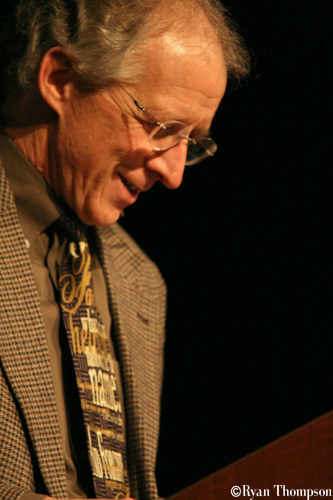 Here's a link to the audio of John Piper's biographical address on Andrew Fuller:
Holy Faith, Worthy Gospel, World Vision: Andrew Fuller’s Broadsides Against Sandemanianism, Hyper-Calvinism, and Global Unbelief.
I'll update this post tomorrow when the manuscript is available (D.V.).
Update: Piper's manuscript is now online. Here are a few quotes:
"The reason I said at the beginning that it is totally possible that Andrew Fuller’s impact on history, by the time Jesus returns, will be far greater and different than it is now, is that there are three volumes of his writings still in print, and he was an unusually brilliant theologian. So quite apart from his influence on the rise of modern missions, his biblical insights may have an impact for good on future generations all out of proportion to his obscure place in the small town of
"What I will try to do is show how his engagement with Sandemanianism recovered and preserved a kind of vital faith that is essential for missions, and his engagement with Hyper-Calvinism (or what he more often called High Calvinism) recovered and preserved a kind of preaching that is essential for missions. And in both cases, the battle was distinctly exegetical and doctrinal even though the all-important outcomes were deeply experiential and globally practical."
"By his own testimony, John Owen ranks first in his esteem of all the writers that influenced him. 'I never met with anything of importance in his writings on which I saw any reason to animadvert; so far from it, that I know of no writer for whom I have so great an esteem.' But even if he esteems Owen above all others, almost everyone who studies Fuller’s works agree that Jonathan Edwards was the most decisively influential in helping him break free from his Hyper-Calvinistic roots.”"The sum of the matter is that Fuller had one great enemy he wanted to defeat—global unbelief in Jesus Christ. He believed that the kingdom of Christ would triumph, and he meant to be an instrument in the conquering of unbelief in India and to the ends of the earth. Standing in the way of that triumph in his generation were false views of justifying faith and false views of gospel preaching. Sandemanianism had ripped the life and power out of faith so that it was powerless in worship and missions. Hyper-Calvinism had muzzled the gospel cry of the Bride (“The Spirit and the Bride say, ‘Come.’ And let the one who hears say, ‘Come.’ And let the one who is thirsty come; let the one who desires take the water of life without price,” Revelation 22:17). For the sake of the life of the church and the salvation of the nations, Fuller took up the battle for truth."
Haggard Update
Ted Haggard has now completed three weeks of intensive counseling in an Arizona treatment center. Rev. Tim Ralph, one of four members of an oversight committee, says: "He is completely heterosexual. That is something he discovered. It was the acting-out situations where things took place. It wasn't a constant thing."
In an email to parishioners, Haggard mentions that he may be moving his family to Iowa or Missouri, and that he and his wife are enrolled in online courses to receive their masters degrees in psychology.
In an email to parishioners, Haggard mentions that he may be moving his family to Iowa or Missouri, and that he and his wife are enrolled in online courses to receive their masters degrees in psychology.
Sproul on the Holiness of Christ
 Audio and notes.
Here is a quote from the notes:
"I am not obsessed with holiness because I am holy. I love the holiness of God because it is my only hope. Without his mercy and holiness there would be no restraint to my wickedness."
The Glory of Holiness in the Life of the Pastor
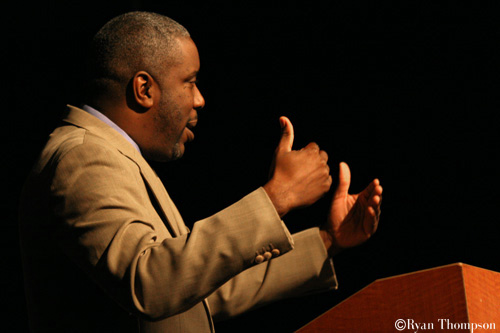 The audio and notes for Thabiti Anyabwile's DG Pastors Conference address are now online.
Thabiti drew 10 points of application from Ezekiel 8-9.
Promote holiness to make people fit for heaven.
Choose your leaders wisely.
Take oversight of the people.
Be clear on the difference between justification and sanctification.
Meditate on the truth that judgment begins in the household of God.
Meditate on the plight of the lost.
Surround yourself with those who sigh and cry over sin.
The holiness of God goes together with the glory of his presence.
Commit yourself to intercession before the judgment comes.
Pursue holiness in the joy of the gospel promise.
Gospel Tracts: Free, Hip, and Theologically Sound
Erik Raymond writes:
I have encountered a problem for as long as I can remember with the tracts that were available. Often times I find ultra cool looking tracts but they lack the evangelistic clarity to be called gospel tracts (you kinda need the evangel to do evangelism :/ ). On the other extreme I have seen tracts that are strong in terms of gospel presentation but look like something that was made 50 years ago. So I have been dreaming of this reality, clear biblically articulate gospel tracts with a distinctly Calvinistic flavor while also having a fresh aesthetic appeal.You can access them here.
J. Alan Groves
J. Alan Groves, an OT professor at Westminster Theological Seminary, has entered into the joy of his master. An obituary can be read at wts.edu. You can also read his family blog, where his wife has posted a moving account of his final hours.
Piper Foreword to The Faithful Preacher
Here is John Piper's foreword to Thabiti Anyabwile's forthcoming book, The Faithful Preacher: Recapturing the Vision of Three African American Pastors.
Sproul on the Holiness of God
 The audio for R. C. Sproul's first message at the DG Pastors Conference--delivered last night--is now online. You can also read the notes taken by Abraham.
Hats off to DG for making these available so quickly!
Subscribe to:
Posts (Atom)